Roofing Insurance Costs Explained (Without the Headache)
Understand your roofing insurance cost as a homeowner or contractor. Learn factors, average rates, and how to save on coverage.
Why Understanding Roofing Insurance Costs Matters
Roofing insurance cost impacts every property owner, but the details depend on whether you're a homeowner protecting your family's biggest investment or a contractor running a roofing business.
For Homeowners:
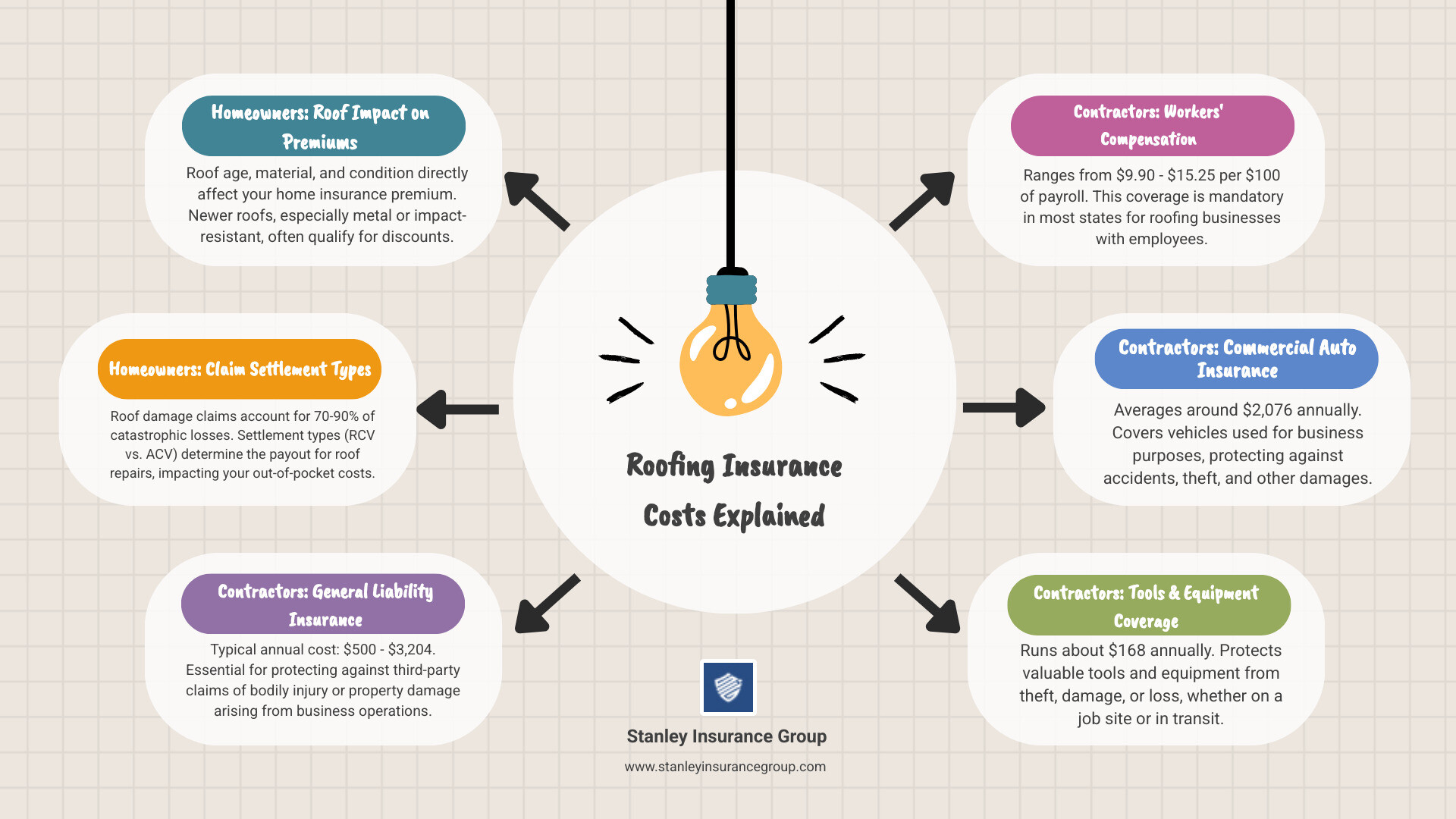
- Your roof's age, material, and condition directly affect your home insurance premium
- Newer roofs (especially metal or impact-resistant materials) often qualify for discounts
- Roof damage claims account for 70-90% of catastrophic losses according to industry data
- Settlement types (RCV vs ACV) determine how much you'll receive for roof repairs
For Roofing Contractors:
- General liability insurance typically costs $500-$3,204 annually
- Workers' compensation ranges from $9.90-$15.25 per $100 of payroll
- Commercial auto insurance averages around $2,076 per year
- Tools and equipment coverage runs about $168 annually
The truth is, roofing insurance isn't just one thing. It's either the roof-related portion of your homeowners policy or the specialized business insurance that roofing contractors need to operate legally and protect their livelihood.
Most homeowners don't realize their roof directly impacts their insurance premium. A 20-year-old roof might only qualify for actual cash value coverage, meaning you'll pay out-of-pocket for depreciation. Meanwhile, roofing contractors face some of the highest insurance rates in construction due to the inherent risks of working at heights with heavy materials.
I'm Brandon Stanley, and I've been helping families and businesses in Hilliard steer roofing insurance cost decisions since taking over our family agency that's been serving the community since '84. Through our independent agent partnerships and personalized approach, I've seen how the right coverage can save thousands when roof damage strikes.
Understanding Roofing Insurance Costs for Homeowners
When you're trying to understand roofing insurance cost for homeowners, you're really looking at how your roof affects your entire homeowners insurance policy. Think of your roof as your home's umbrella – it's the first thing that gets hit when storms roll through, which is exactly why insurance companies pay such close attention to it.
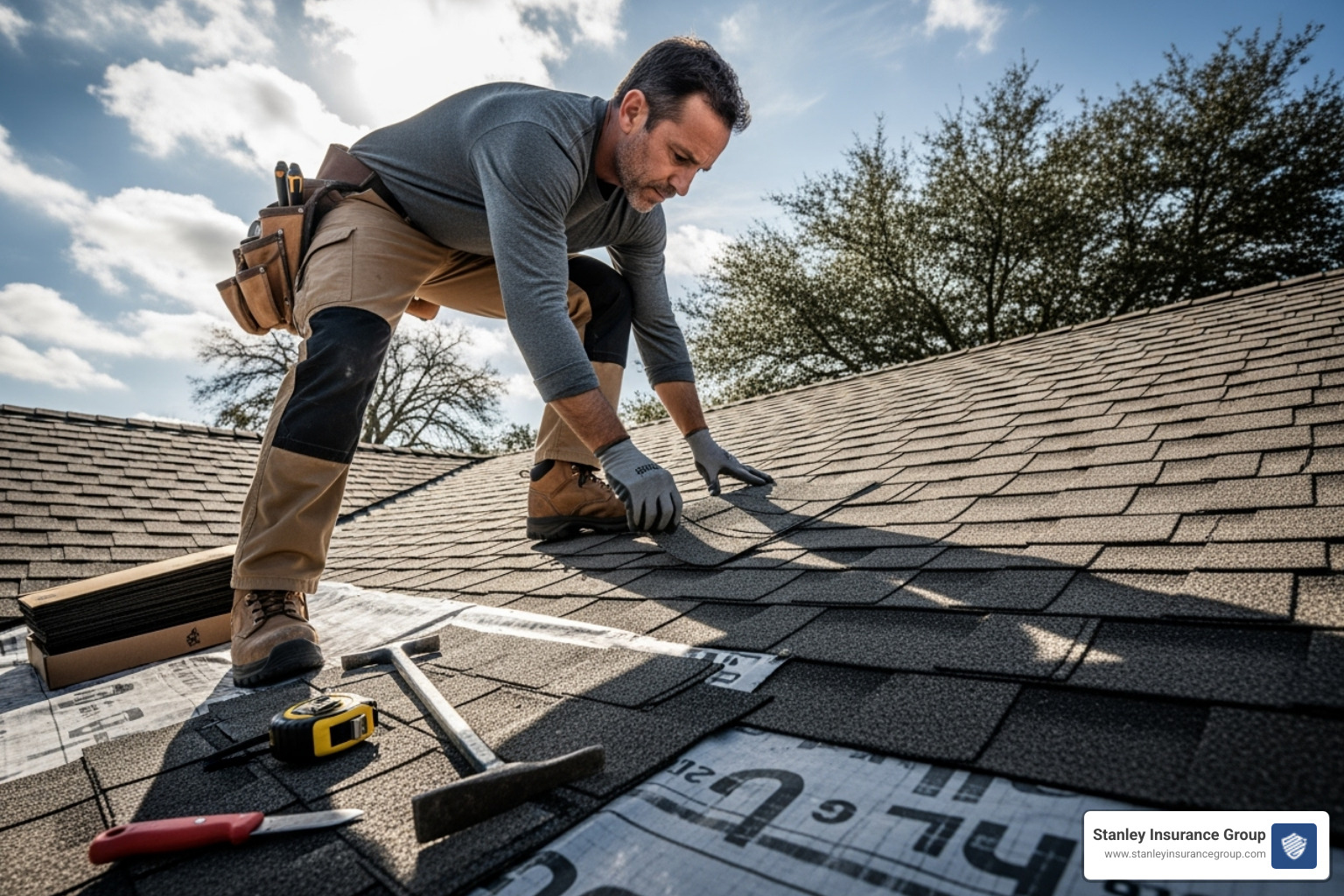
Here's the thing: your homeowners insurance policy is designed to protect your biggest investment. The dwelling coverage (that's Coverage A in insurance speak) is where your roof protection lives. When covered perils like wind, hail, fire, or that giant oak tree in your backyard decide to have a disagreement with your roof, this coverage steps in to help.
But here's where it gets interesting – and where many homeowners get surprised. The age and condition of your roof directly impact both your premium and what you'll actually receive if you need to file a claim.
Actual Cash Value versus Replacement Cost Value makes a huge difference in your wallet. If you have an older roof (typically 20+ years), your policy might only cover its Actual Cash Value (ACV). That means if your 25-year-old roof gets damaged, the insurance company pays you what that old roof was worth after depreciation – not what a brand new roof costs today. You could be looking at thousands out of your own pocket.
Replacement Cost Value (RCV) coverage, on the other hand, covers the full cost of replacing your roof with new materials at today's prices. Yes, RCV policies cost more upfront, but they can save you from a financial shock when disaster strikes.
The material your roof is made from also plays a big role in determining your roofing insurance cost. Some materials are insurance company favorites, while others make underwriters nervous. Your location matters too – living in hurricane zones or hail-prone areas means higher premiums because Mother Nature has a track record of targeting roofs in those regions.
If you want to dive deeper into all the coverage options available for your home, check out our guide on What Are the Different Types of Home Insurance.
What Factors Determine Your Home's Roofing Insurance Cost?
Your roof isn't just keeping the rain out – it's also keeping your insurance premiums in check (or driving them up). Insurance companies look at your roof like a detective examines evidence, and every detail matters for your roofing insurance cost.
Roof material is probably the biggest factor. Asphalt shingles are the most common choice and generally offer reasonable premiums, though their lifespan varies. Metal roofing is the overachiever of roofing materials – it can last 40 to 70 years and laughs in the face of fire, wind, and hail. Insurance companies love this durability and often reward metal roof owners with lower premiums.
Slate tiles are incredibly tough and fire-resistant, which insurers appreciate. However, they can be brittle and expensive to install. Wood shakes might look beautiful, but they can make insurance companies nervous due to fire risk and weather vulnerability, potentially leading to higher premiums.
Roof age is straightforward math to insurers: newer equals safer. A roof under 10-15 years old typically qualifies for the best rates. Once your roof hits the 20-year mark, you might face inspection requirements or coverage limitations. It's like your roof's report card – the older it gets, the more scrutiny it faces.
Geographic location can make or break your premium. Living in hurricane zones along the coast or hail-prone areas in the Midwest means your roof is essentially in a boxing match with Mother Nature every storm season. The Insurance Institute for Business & Home Safety found that roof damage accounts for 70-90% of catastrophic losses, which explains why location matters so much.
Your claims history follows you around like a shadow. Previous roof claims signal to insurers that you might file again, which can bump up your rates. Meanwhile, your policy deductible and coverage limits directly impact your premium – higher deductibles mean lower monthly costs, but more out-of-pocket expense when you need to file a claim.
For a detailed look at how these factors play out in real premium calculations, take a peek at our Home Insurance Premium Comparison.
How to Manage Your Home Roofing Insurance Premiums
Nobody wants to throw money at insurance premiums unnecessarily, and the good news is you don't have to. There are smart ways to manage your roofing insurance cost without sacrificing protection. Since '84, we've been helping families in Hilliard find that sweet spot between great coverage and reasonable premiums.
Regular roof maintenance is your best friend here. Keep those gutters clean, trim overhanging branches, and do regular inspections. Document everything with photos – it shows insurers you're proactive about protecting your investment. This isn't just busy work; it's claim prevention that saves you money long-term.
Impact-resistant roofing materials are worth considering if you're due for a replacement. Insurance companies often offer discounts for materials that can better withstand storms. It's an upfront investment that pays dividends through lower premiums and fewer headaches.
Bundling your home and auto policies is one of the easiest ways to save. When you combine your Home Insurance with auto coverage, most insurers offer significant multi-policy discounts. As an independent agency, we can help you explore bundling options across multiple carriers to find the best deal.
Increasing your deductible lowers your premium, but make sure you choose an amount you can comfortably afford in an emergency. It's a balancing act between monthly savings and potential out-of-pocket costs.
Shopping with an independent agent gives you a major advantage. Unlike agents who work for just one company, we partner with multiple top-rated insurers. This means we can compare quotes and coverage options to find what works best for your specific situation. It's like having a personal shopper for insurance – we do the legwork while you get the benefits.
Don't forget to ask about available discounts for security systems, smart home technology, or loyalty programs. Reviewing your policy annually ensures you're not missing new discounts or paying for coverage you no longer need.
For more money-saving strategies, check out our comprehensive guide on How to Lower Homeowners Insurance Premiums. And if you ever need to file a claim, we're here to guide you through the process with our Help with Insurance Claims support.
A Guide to Roofing Insurance Costs for Contractors
Now, let's shift gears and talk about roofing insurance cost from the perspective of a contractor. If you're running a roofing business, you know it's one of the most challenging professions out there. Between working at dangerous heights, handling heavy materials, and dealing with unpredictable weather, the risks are everywhere you look. That's why business insurance isn't just recommended for roofing contractors—it's absolutely essential for protecting your business, your crew, and your future.
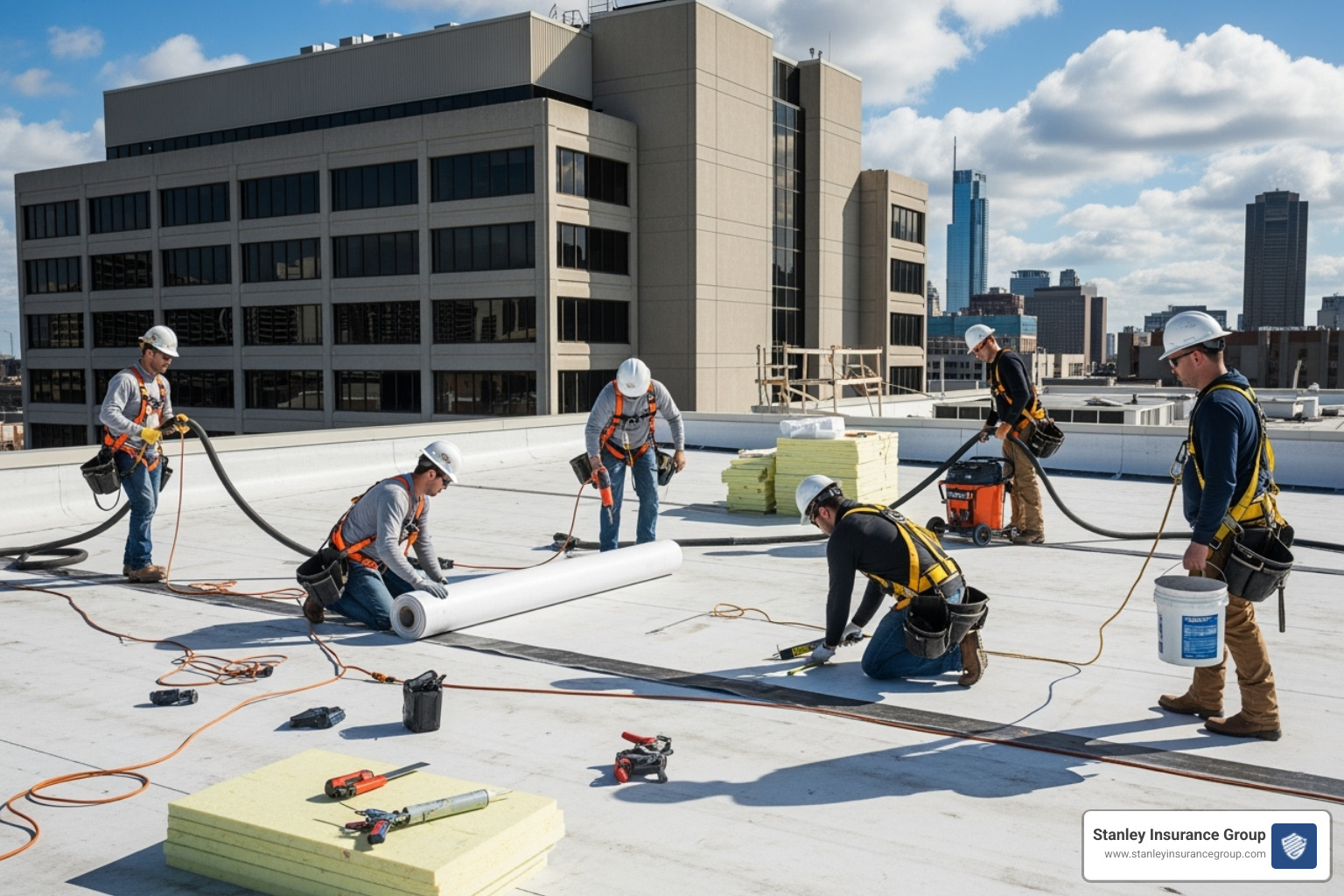
Unlike homeowners who typically carry one comprehensive policy, roofing contractors need several different types of business insurance to stay protected. Each policy covers specific risks that come with the territory. General liability protects you if someone gets hurt on a job site or if you accidentally damage a client's property. Workers' compensation is there when one of your team members gets injured on the job. Commercial auto covers your work trucks and equipment trailers when they're on the road.
Beyond just protecting your assets, having proper insurance coverage is often a legal requirement. Most states require workers' compensation if you have employees, and you'll need commercial auto insurance for any vehicles used for business purposes. But here's the thing—good insurance coverage also builds serious client trust. When potential customers see that you're fully insured, it shows professionalism and gives them confidence that they won't be left dealing with problems if something goes wrong on their project.
Average Roofing Insurance Cost for Businesses
When we talk about the total roofing insurance cost for contractors, we're really looking at several different policies working together. Each one addresses specific risks that roofing businesses face every day. While exact costs depend on your specific situation—like how many employees you have and what types of projects you take on—here's what most roofing contractors can expect to pay:
| Policy Type | Typical Annual Cost Range | What It Covers |
|---|---|---|
| General Liability Insurance | $500 - $3,204 annually | Third-party injuries, property damage, advertising claims |
| Workers' Compensation | $9.90 - $15.25 per $100 of payroll | Employee injuries and illnesses on the job |
| Commercial Auto Insurance | ~$2,076 annually | Business vehicles, equipment trailers, liability while driving |
| Tools & Equipment Insurance | ~$168 annually | Theft or damage to your tools and equipment |
Many contractors find that bundling these coverages into a Business Owner's Policy (BOP) can provide better rates and simpler management. A BOP typically combines general liability with property coverage, which can be perfect for smaller roofing operations.
For contractors who also need to protect their physical business location, property insurance becomes important too. You can learn more about how property coverage works in our guide on Property Insurance Cost.
What Determines a Roofing Contractor's Insurance Rate?
Your roofing insurance cost isn't pulled out of thin air—insurance companies look at specific factors to determine how much risk your business presents. Understanding these factors can help you make smart decisions that might lower your premiums.
Business size plays a huge role in your rates. A solo contractor working on residential repairs will pay significantly less than a company with 20 employees handling large commercial projects. The number of employees you have directly affects your workers' compensation costs, since that coverage is calculated based on your payroll.
Your annual revenue also matters because higher revenue usually means bigger projects and potentially more exposure to claims. The services you offer make a difference too—residential roofing work is generally considered lower risk than commercial projects, and using heat or torch-down methods for flat roofing can increase your rates due to fire risk.
Just like with personal insurance, your claims history follows you. Contractors with clean records get better rates, while those who've filed multiple claims may face higher premiums. Your location affects rates as well—working in areas prone to severe weather or with higher construction activity can impact costs.
Coverage limits are another key factor. Higher limits mean more protection but also higher premiums. The trick is finding the right balance between adequate coverage and affordable costs.
Here's something interesting: In Canada, roofing businesses must have a surety bond, which adds another layer of financial protection for clients. While this isn't typically required in the U.S., some large commercial clients may request it.
At Stanley Insurance Group, our commercial lines specialist Amy works closely with roofing contractors to understand these factors and find coverage that fits both their needs and their budget. Since '84, we've been helping local businesses steer these decisions with that personal, concierge touch that comes from building real relationships with our clients.
Similar posts