Risky Business: Understanding the Average Cost of High-Risk Car Insurance
Understand the **average cost for high risk car insurance**. Learn why you're high-risk, how to find affordable coverage, and improve your status.
Why High-Risk Car Insurance Costs More Than You Think
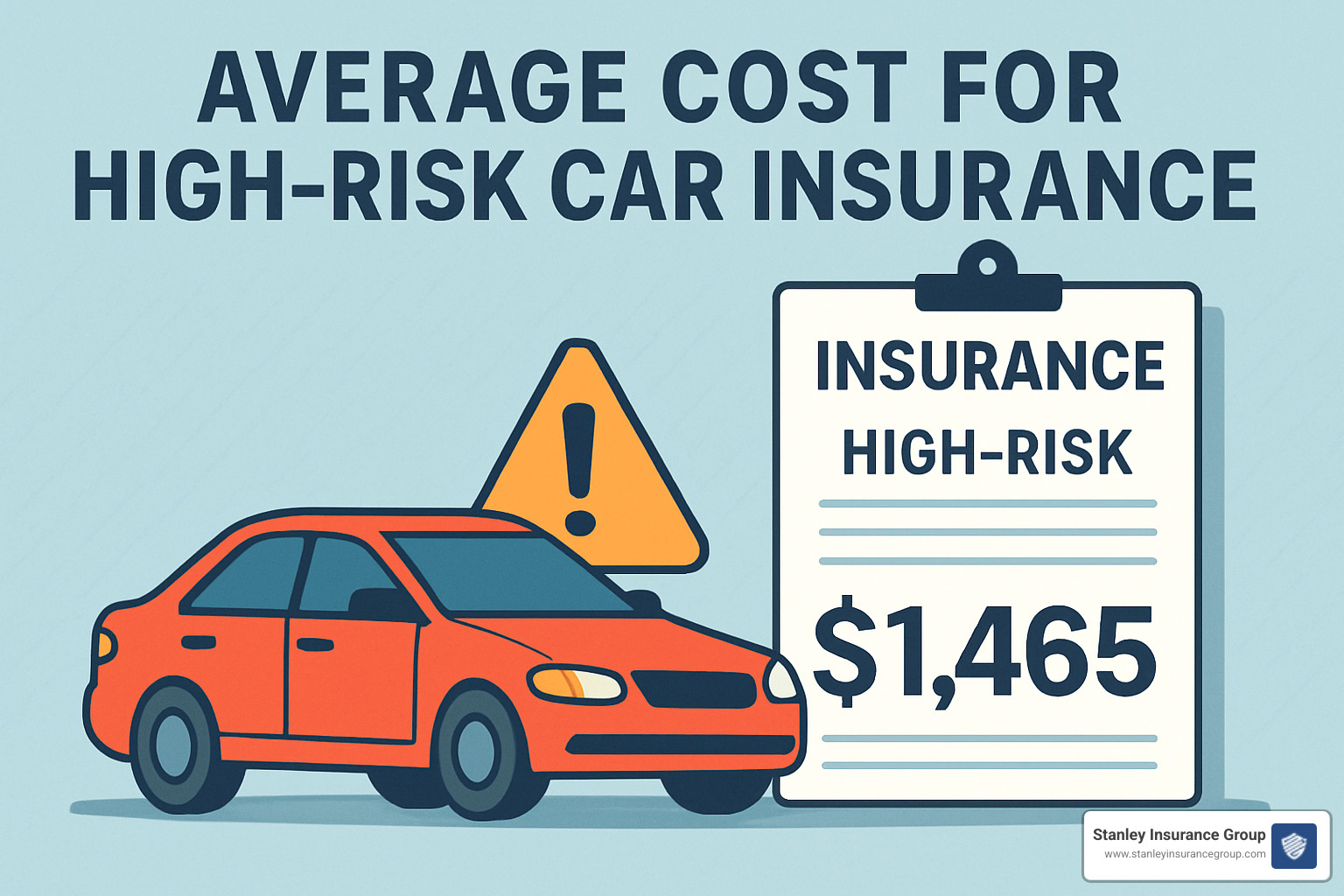
The average cost for high risk car insurance ranges from $1,500 to $5,000 annually for most drivers, but can reach $8,000 to $20,000 per year for severe cases. Here's what drives these higher premiums:
High-Risk Premium Increases:
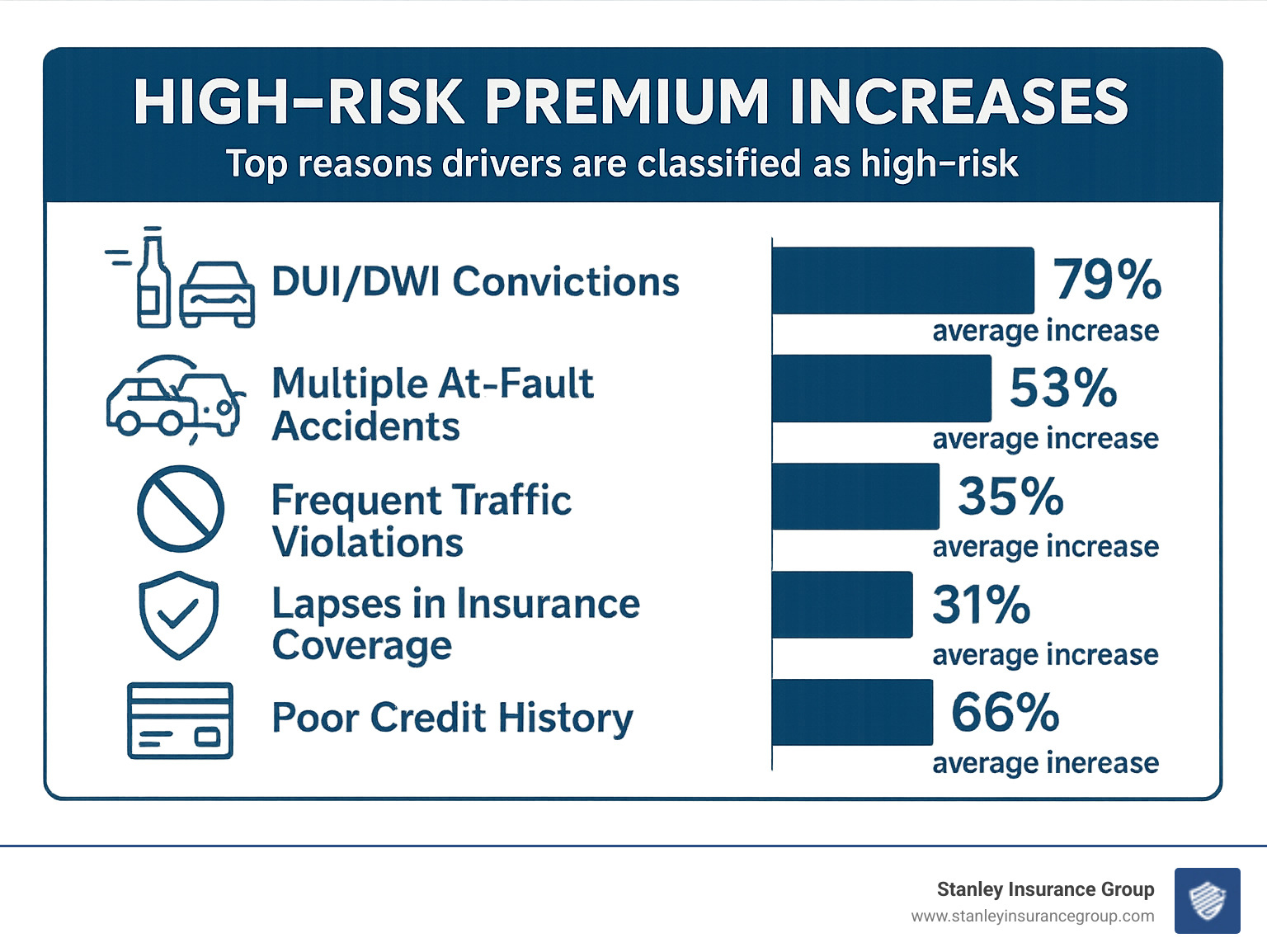
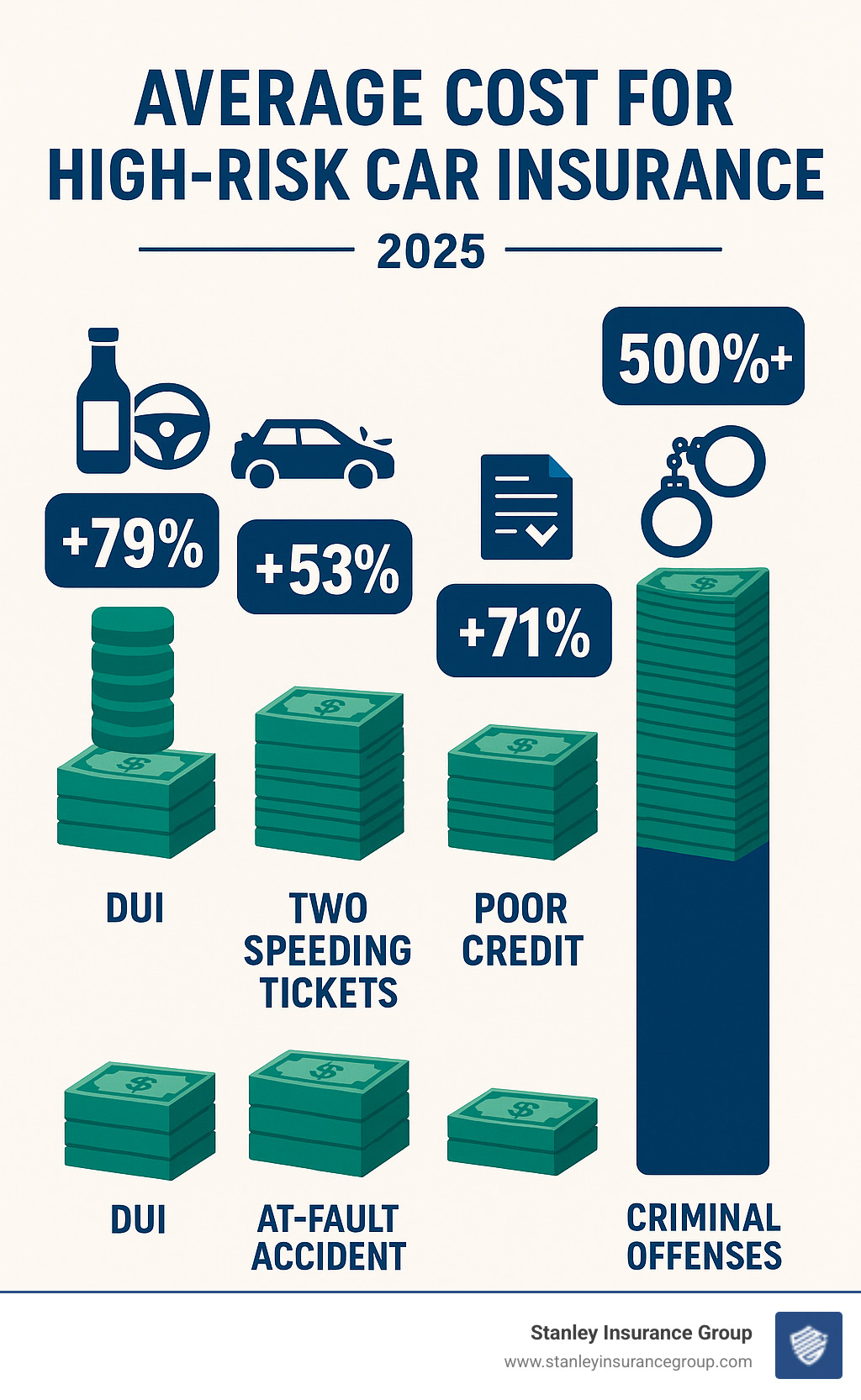
- DUI conviction: 79% average increase
- At-fault accident: 53% average increase
- Two speeding tickets: 43% average increase
- Poor credit score: 71% increase in applicable states
- Criminal code offense: 500%+ increase potential
Being classified as a "high-risk" driver means insurance companies view you as more likely to file a claim. This designation can stem from various factors including traffic violations, at-fault accidents, DUI convictions, lapses in coverage, or even your age and credit history.
As noted by industry experts, "high-risk doesn't always mean dangerous driving" - sometimes it's simply a matter of inexperience or unfortunate circumstances. The key is understanding that this label isn't permanent, and there are strategies to manage costs while working toward better rates.
I'm Brandon Stanley, and since 1984, I've helped countless drivers steer the complexities of high-risk insurance situations at Stanley Insurance Group. My experience with the average cost for high risk car insurance has shown me that with the right approach and guidance, even high-risk drivers can find affordable coverage options. Our independent agents provide that concierge touch, building relationships to help you find the best solution for your unique situation.
What Makes a Driver "High-Risk"?
Nobody wakes up wanting to be labeled a "high-risk" driver, but understanding what puts you in this category is your first step toward finding affordable coverage. Insurance companies don't just randomly assign these labels - they use detailed risk assessment tools to predict who's most likely to file claims.
The truth is, some factors that make you high-risk might surprise you. While everyone knows that driving under the influence (DUI) is a serious red flag, many drivers don't realize that having poor credit can impact their average cost for high risk car insurance just as much as a speeding ticket.
At-fault accidents are another major factor, especially if you have multiple incidents on your record. Even one serious accident can significantly raise your risk profile and premiums. Insurance companies see patterns in these accidents that suggest future claims are likely.
Multiple speeding tickets tell insurers you have a habit of breaking traffic laws. While one ticket might not hurt too much, accumulating several violations shows a pattern of risky behavior that companies want to avoid.
Reckless driving convictions are particularly damaging because they indicate dangerous behavior behind the wheel. Similarly, insurance lapses suggest financial instability or irresponsibility - both concerns for insurers who need reliable premium payments.
New drivers face high-risk classification simply due to inexperience. According to research from the Insurance Institute for Highway Safety, teen drivers aged 16-19 are involved in a disproportionate number of crashes despite representing a smaller portion of licensed drivers.
Finally, your poor credit score can significantly impact your rates in most states. Studies show that drivers with poor credit are statistically more likely to file claims, which directly affects your premiums.
For more detailed information about auto insurance for high-risk drivers, we've compiled additional resources to help you understand these classifications better.
Key Reasons for a High-Risk Classification
The insurance industry has spent decades identifying patterns that predict claims, and certain factors consistently raise red flags. Understanding these can help you see why your rates might be higher than expected.
Traffic violations are the most obvious trigger. This includes everything from speeding tickets to running red lights, illegal turns, and failure to yield. The frequency and severity of these violations directly impact how insurers view your risk level.
Major convictions carry the most weight in determining your average cost for high risk car insurance. DUI convictions, reckless driving, or hit-and-run incidents can keep you in the high-risk category for 5-10 years or longer, depending on your state's regulations.
Accident history gets careful scrutiny from insurance companies. They look at both how often you've had accidents and how severe they were. Multiple at-fault accidents, especially those involving injuries or significant property damage, are particularly damaging to your risk profile.
Inexperience affects more than just teenagers. Adult drivers who are new to driving or returning after a long break are also considered higher risk. The research on teen driver risk factors shows that inexperience is a significant predictor of accident likelihood, regardless of age.
Lapses in coverage signal to insurers that you may be financially unstable or irresponsible. Even short gaps in coverage can result in higher premiums when you reapply for insurance.
Vehicle type also plays a role in your classification. High-performance cars and exotic vehicles are statistically more likely to be involved in accidents and are more expensive to repair, leading to higher premiums for their owners.
The Role of Credit History in Your Premiums
Here's something that catches many drivers off guard: your credit history can impact your car insurance rates just as much as your driving record. Insurance companies use credit-based insurance scores, which are different from traditional credit scores but derived from similar information.
The claim likelihood correlation has been extensively studied by the Federal Trade Commission. Drivers with lower credit scores are statistically more likely to file claims, and those claims tend to be more expensive. This isn't necessarily about financial responsibility - it's about risk correlation that insurers have observed over decades.
State regulations vary significantly regarding credit score usage. California, Hawaii, Massachusetts, and Michigan prohibit insurers from using credit scores in determining premiums. In other states, credit can have a substantial impact on your rates.
The NAIC provides detailed information on credit scores and insurance that explains the relationship between credit and insurance pricing for those who want to dive deeper into this topic.
Premium increases due to poor credit can be substantial. Our research shows that drivers with poor credit may pay significantly more for insurance than those with good credit. This means that improving your credit score can be one of the most effective ways to reduce your insurance costs over time.
The good news is that financial responsibility improvements are noticed by insurers. As your credit improves and you demonstrate consistent payment history, your rates should reflect these positive changes.
The Average Cost for High-Risk Car Insurance Explained

Understanding the average cost for high risk car insurance requires looking at multiple factors that influence premium calculations. Insurance companies use complex algorithms to assess risk, and high-risk drivers face significantly higher premiums due to their increased likelihood of filing claims.
Premium increases for high-risk drivers aren't arbitrary - they're based on actuarial data that shows these drivers are statistically more likely to be involved in accidents. The rate calculation process considers your driving record, claims history, vehicle type, location, and numerous other factors.
Risk assessment varies significantly by state due to different regulations, minimum coverage requirements, and local conditions. For example, states with higher rates of vehicle theft, severe weather, or dense urban areas typically have higher baseline insurance costs, which are then amplified for high-risk drivers.
State-by-state variance in the average cost for high risk car insurance can be dramatic. While a high-risk driver in Maine might pay $3,000 annually, a similar driver in Florida could face premiums of $8,000 or more. This variation reflects local risk factors, state regulations, and the competitive landscape among insurers.
Policy limits and deductibles also play crucial roles in determining your final premium. Higher coverage limits provide better protection but increase costs, while higher deductibles can lower your premium but increase your out-of-pocket expenses in the event of a claim.
What is the Average Cost for High-Risk Car Insurance?
The average cost for high risk car insurance varies widely based on the specific risk factors involved, but we can provide some general ranges based on industry data:
Standard high-risk drivers typically pay between $1,500 to $5,000 annually for coverage. This range applies to drivers with moderate risk factors such as a few speeding tickets, one at-fault accident, or a brief lapse in coverage.
Severe cases can see premiums ranging from $8,000 to $20,000 annually. These extreme costs typically apply to drivers with multiple DUI convictions, numerous at-fault accidents, or serious criminal driving offenses.
Percentage increases compared to standard rates are often more meaningful than absolute dollar amounts. High-risk drivers typically pay 30% to 80% more than drivers with clean records, though increases can be much higher for severe violations.
To put this in perspective, if a standard driver pays $1,200 annually for coverage, a high-risk driver with similar coverage needs might pay anywhere from $1,560 to $2,160 for the same policy - and that's for moderate risk factors.
The variation in costs also depends heavily on your location. Our research shows that monthly payments for high-risk auto insurance can range from $200 to $500 or more, with significant regional differences. For example, drivers in urban areas like Toronto or Richmond Hill face much higher costs than those in smaller cities.
How Specific Violations Impact the Average Cost for High-Risk Car Insurance
Different violations have varying impacts on your insurance premiums, and understanding these differences can help you better prepare for rate increases:
DUI conviction impact is among the most severe. Our data shows an average increase of 79% for drivers with a DUI conviction. In some cases, premiums can increase by 96% or more, adding $1,680 or more to your annual premium. The impact duration varies by state, with some states considering DUI convictions for up to 10 years.
At-fault accident costs result in an average increase of 53%, or about $920 annually. However, this can vary significantly based on the severity of the accident and whether injuries were involved. Multiple at-fault accidents can compound this effect, with some drivers seeing increases of 125% or more.
Multiple traffic tickets create cumulative effects. Two speeding tickets typically result in a 43% increase in premiums. The impact isn't just additive - multiple violations suggest a pattern of risky behavior that insurers penalize heavily.
Distracted driving violations, such as texting while driving, can increase premiums by 15-30% or more. While this might seem moderate compared to other violations, distracted driving laws are becoming stricter, and penalties are increasing.
Criminal code offenses such as street racing, hit-and-run, or vehicular assault can result in premium increases of 500% or more. These severe violations can make you nearly uninsurable with standard carriers, forcing you into high-risk insurance pools where costs are dramatically higher.
How to Find Affordable High-Risk Insurance
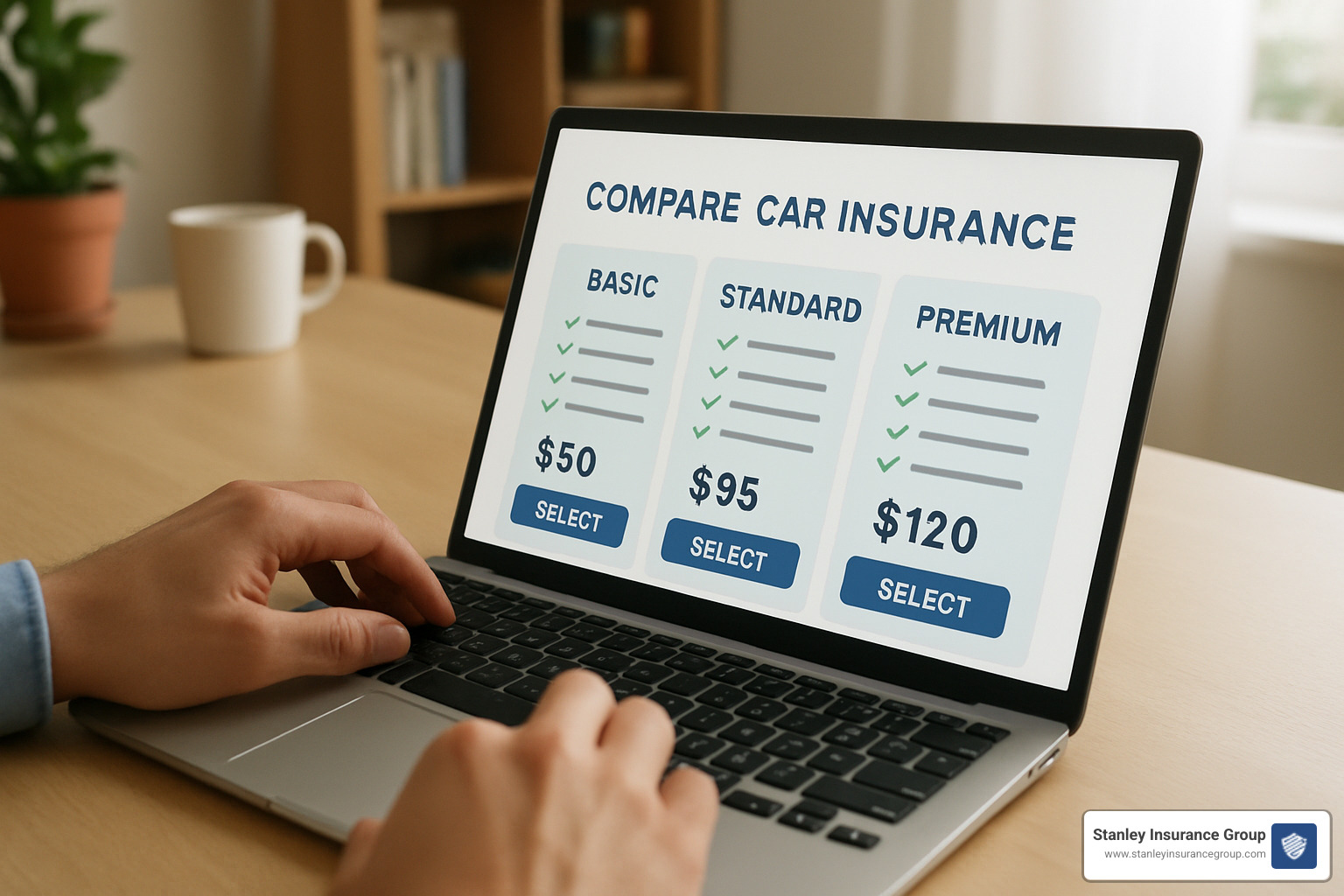
Finding a reasonable rate when you’ve been tagged "high-risk" starts with one simple rule: never accept the first quote. Each insurer weighs violations differently, so prices can vary by thousands of dollars.
- Shop widely. Get quotes from at least three carriers. The spread is often wider for high-risk drivers than for standard ones.
- Use independent agents. Agencies like Stanley Insurance Group compare multiple companies at once—saving you time and, very often, money.
- Consider non-standard insurers. These specialists build policies for drivers with DUIs, multiple accidents, or lapses in coverage.
- Know your safety net. If private carriers decline you, a state-assigned risk plan keeps you legal, though at higher cost.
- Handle SR-22/FR-44 filings. They’re not policies; they’re proof you carry the required limits. Make sure any company you consider can file on your behalf.
Ready to see numbers? Request an Auto Insurance Quote and let our team do the comparison shopping for you.
Coverage Options for High-Risk Drivers
You’re still eligible for the same protections as any driver:
- Liability (required in almost every state)
- Collision & Comprehensive (often mandatory if you lease or finance)
- Uninsured/Underinsured Motorist
- Personal Injury Protection (PIP) where available
- SR-22 filing service when ordered by a court or DMV
Quick Ways to Shrink Your First Bill
- Raise the deductible—only if you can afford the out-of-pocket risk.
- Choose a safer vehicle. Family sedans usually cost less to insure than sports or luxury cars.
- Ask for every discount. Good student, defensive-driving class, and multi-policy bundling still apply to high-risk policies.
- Bundle home, life, or business coverage with the same agency for extra savings and a single point of service.
Even a few of these steps can trim hundreds of dollars off the average cost for high risk car insurance.
Improving Your Status and Reducing Premiums Over Time

High-risk status isn’t forever. With each violation-free month, your record ages and your risk score improves—often dropping premiums dramatically after three to five years.
How Long Do Infractions Matter?
- Minor tickets: affect rates for roughly 3–5 years.
- At-fault accidents: 3–6 years, depending on severity.
- DUI & major convictions: 5–10 years or longer in some states.
Action Plan to Shed the Label
- Stay claim-free. No tickets, no accidents—it’s the fastest path to lower rates.
- Take an approved defensive-driving course for an immediate discount and safer habits. Partner defensive driving courses
- Improve your credit score where permitted; on-time bill payment helps both credit and insurance history.
- Set up automatic premium payments to avoid a lapse that would reset the clock.
- Review your policy annually with Stanley Insurance Group to catch new discounts as your record clears.
Patience pays. Many clients see their average cost for high risk car insurance drop by thousands once violations age off their record.
Your Partner in Navigating High-Risk Insurance
Being labeled high-risk can feel overwhelming, but here's the truth: it doesn't have to be a permanent financial burden. By understanding what drives your rates and taking the right steps, you can find manageable coverage today and work your way back to those sweet, affordable premiums tomorrow.
Since '84, our team at Stanley Insurance Group has been right here in Hilliard, Ohio, providing that personal touch that makes all the difference. We're not just another insurance agency - we're relationship builders who understand that behind every high-risk label is a real person with a unique story.
Our independent agents bring decades of experience to your situation. Whether you're working with our Spanish-speaking specialists Ana and Sandra, or getting guidance from our associate agents Kaisen, Ethan, and Chase, you're getting someone who truly cares about finding you the best possible solution.
Here's something that sets us apart: we're one of only 100 independent agents in the country with exclusive partnerships that give us access to options many other agents simply can't offer. This isn't just about having more choices - it's about having the right choices for your specific situation.
Every high-risk driver's story is different. Maybe you're dealing with a recent DUI and feeling like you'll never get affordable coverage again. Perhaps you've had multiple accidents and think you're stuck with sky-high premiums forever. Or maybe you're just trying to get back on the road after a lapse in coverage and everything seems impossibly expensive.
We get it. And more importantly, we know how to help.
The average cost for high risk car insurance may be higher than standard rates, but with the right approach and professional guidance, you can find coverage that won't break the bank. We work with multiple carriers specifically because we know that what one company sees as unacceptable risk, another might be willing to cover at a reasonable rate.
Don't let a high-risk label keep you from getting the protection you need. Your assets, your family, your future - they're all worth protecting, regardless of what your driving record looks like today.
For personalized guidance on your Auto Insurance needs, contact us today. Our team is ready to help you steer the high-risk insurance market and find the best possible rates for your situation. Because at Stanley Insurance Group, we believe everyone deserves a second chance - and affordable coverage to go with it.
Similar posts