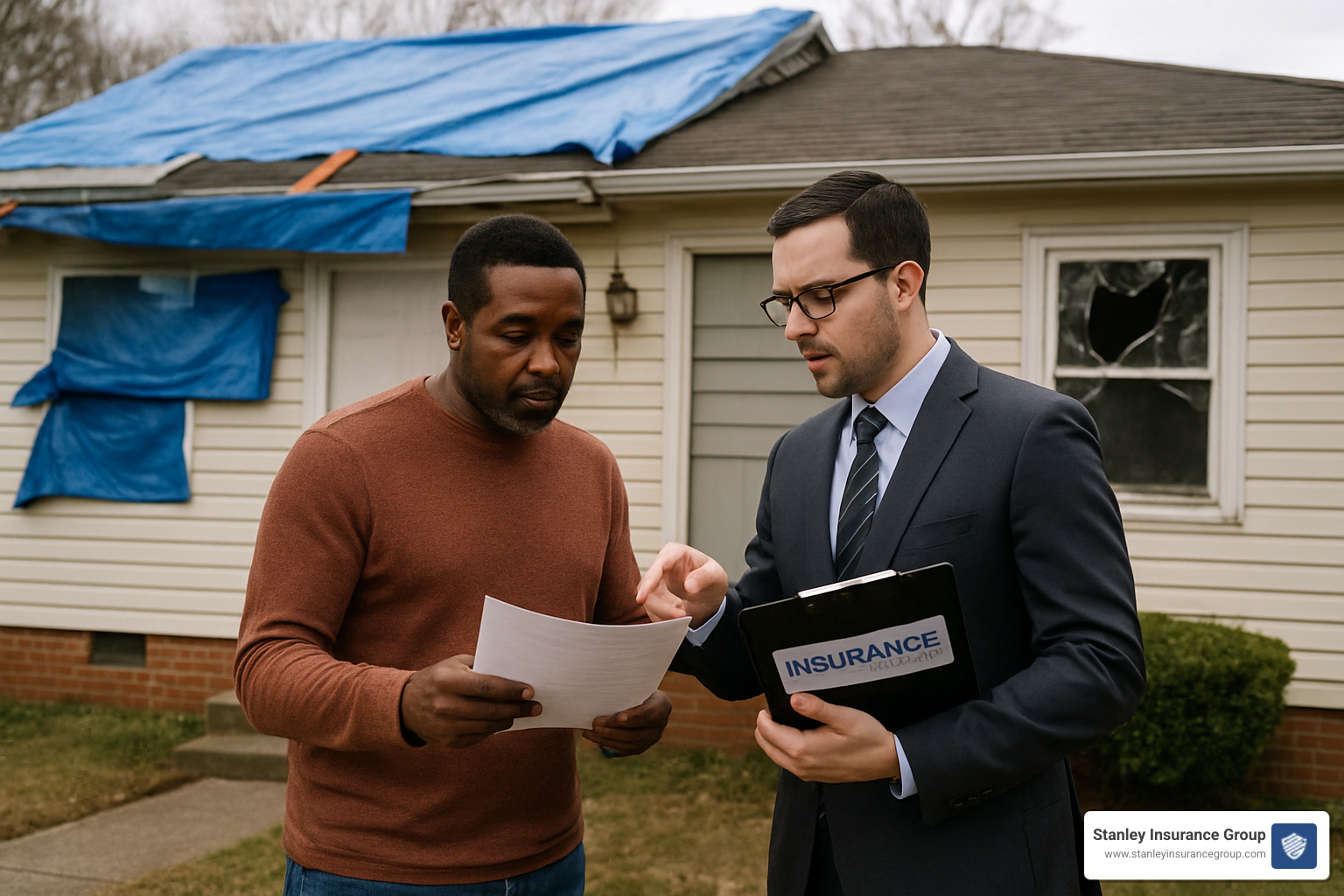
Mastering the Home Insurance Claim Process
Get expert Home insurance claims advice to prepare, file, and maximize your claim. Learn steps, tips, and avoid common mistakes today.
Navigating the Claims Process: What You Need to Know
Home insurance claims advice is critical when disaster strikes your home. To help you steer this process successfully, here are the essential steps:
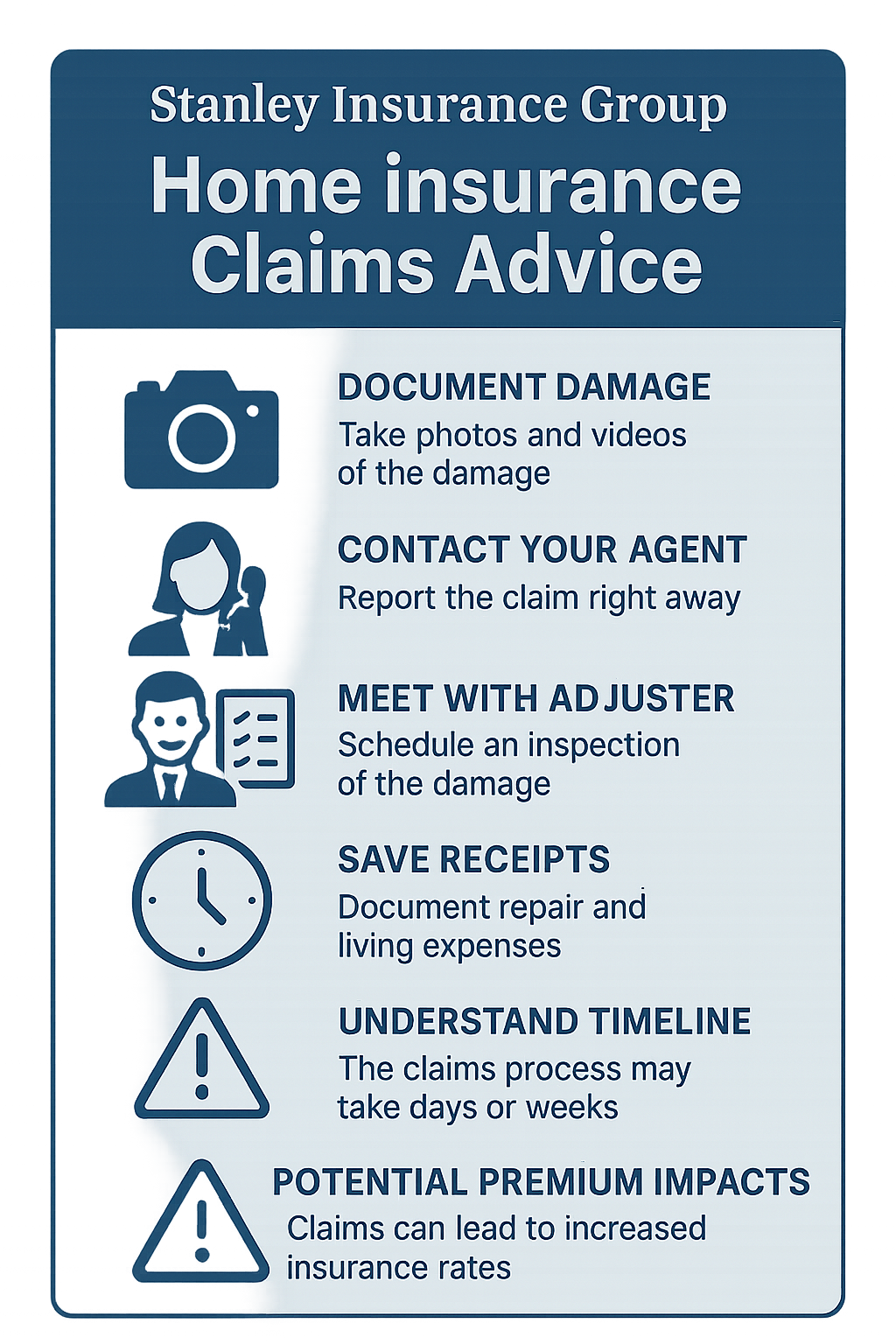
- Safety first - Ensure everyone is safe and prevent further damage
- Document everything - Take photos and videos of all damage before cleanup
- Contact your insurer immediately - Report the claim within the required timeframe
- Keep all receipts - Track expenses for repairs and temporary living arrangements
- Understand your coverage - Review policy limits and exclusions before agreeing to settlements
Filing a home insurance claim can feel overwhelming, especially when you're already dealing with property damage or loss. Whether it's a burst pipe flooding your basement, a tree crashing through your roof during a storm, or theft of valuable items, knowing how to steer the claims process can make a significant difference in your recovery.
The burden of proof falls on you as the policyholder, which means thorough documentation and prompt action are essential. According to industry data, the average fire and lightning-related homeowners insurance claim was over $83,000 in 2021 - demonstrating just how vital proper claims handling can be to your financial wellbeing.
Before deciding to file, consider whether repair costs will exceed your deductible, as filing small claims may lead to premium increases. Data shows that a single fire-related claim can raise premiums by 29%, while two such claims might spike rates by 60%.
I'm Brandon Stanley, President of Stanley Insurance Group, and I've been helping families steer home insurance claims advice since establishing our independent agency in 1984. At Stanley Insurance Group, we provide concierge-level guidance through every step of the claims process, with 24/7 support from our team including Spanish-speaking specialists.
Must-know Home insurance claims advice terms:
- Home insurance premium comparison
- how to lower homeowners insurance premiums
- Bundle home and auto insurance
Understand Your Coverage Before Trouble Hits
One of the most important pieces of home insurance claims advice we give our clients at Stanley Insurance Group is to understand your policy before disaster strikes. As Amy, our Commercial Lines specialist often says, "The worst time to learn about your coverage is after you've suffered a loss."
Your policy is essentially a contract that outlines what is and isn't covered, your deductible amounts, coverage limits, and any special endorsements you may have. Taking the time to review this document annually can save you significant headaches when filing a claim.
"Now is the time you should get an 'insurance checkup,'" advises Chase, one of our Associate Agents. "Contact us anytime to review what your policy covers and doesn't cover. We're available 24/7 to walk you through your coverage and identify any potential gaps."
Key elements to understand:
- Policy type: Replacement cost vs. actual cash value coverage
- Deductibles: The amount you'll pay out-of-pocket before insurance kicks in
- Coverage limits: Maximum amounts payable for dwelling, personal property, liability, etc.
- Exclusions: Perils not covered (typically flood, earthquake, normal wear and tear)
- Endorsements: Additional coverages you've added (jewelry, home office, etc.)
Standard homeowners policies don't cover flood damage. If you live in Columbus, Hilliard, Dublin, or other Ohio areas prone to flooding, you'll need separate flood insurance for protection against rising water.
Build a Digital Home Inventory
Perhaps the most valuable home insurance claims advice we can offer is to create and maintain a detailed home inventory before disaster strikes. This documentation will be your best friend during the claims process.
"I've seen claims settled twice as fast when homeowners come prepared with a comprehensive inventory," notes Kaisen, one of our Associate Agents. "It's the difference between remembering everything you owned versus forgetting valuable items in the stress of the moment."
The National Association of Insurance Commissioners (NAIC) offers a free Home Inventory tool that makes this process simple. Using this app, you can:
- Photograph each room and valuable item
- Record serial numbers, makes, and models
- Store purchase receipts and appraisals
- Categorize belongings by room or type
- Export your inventory for safekeeping

Store your inventory in the cloud or email it to yourself so it's accessible even if your home and devices are damaged. For our clients in Hilliard, Columbus, and throughout Ohio, we recommend updating this inventory annually or after major purchases.
Schedule an Annual "Insurance Check-Up"
Since establishing Stanley Insurance Group in 1984, we've emphasized the importance of regular policy reviews. Insurance needs evolve as your life changes - renovations, new purchases, or lifestyle adjustments can all impact your coverage requirements.
During your annual "insurance check-up" with our team, we'll help you:
- Identify coverage gaps that could leave you vulnerable
- Assess whether you need additional protection for floods, earthquakes, or other excluded perils
- Ensure your coverage keeps pace with rising building costs and code changes
- Review your deductible options to balance monthly premiums with out-of-pocket expenses
- Evaluate whether your personal property coverage accurately reflects your belongings
Ana and Sandra, our Spanish-speaking Account Specialists, are available to conduct these reviews in Spanish if preferred. Just call our office to schedule your check-up - it typically takes less than 30 minutes but can save you thousands in the event of a claim.
Immediate Actions After Damage Occurs
That moment when disaster strikes your home can feel like the world is crashing down around you. Whether it's the heart-stopping sound of a tree limb punching through your roof during a storm, the hiss of water spraying from a burst pipe, or coming home to find your belongings scattered after a break-in—these critical first hours matter tremendously for your insurance claim.
Safety absolutely comes first. If your home has suffered severe damage, please don't try to be a hero. Wait until emergency personnel have given you the all-clear before reentering. Your family photos and keepsakes are precious, but not worth risking your safety.
"I remember a family in Dublin who wanted to rush back in after a kitchen fire to grab important documents," shares Chase, one of our Associate Agents. "We reminded them that while documents can be replaced, they cannot. Their safety was our primary concern."
Once safety is established, prevent further damage to your property. This might mean covering broken windows with plastic, placing buckets under leaks, or having a professional tarp your damaged roof. Keep every receipt from these emergency repairs—they're typically reimbursable under your policy.
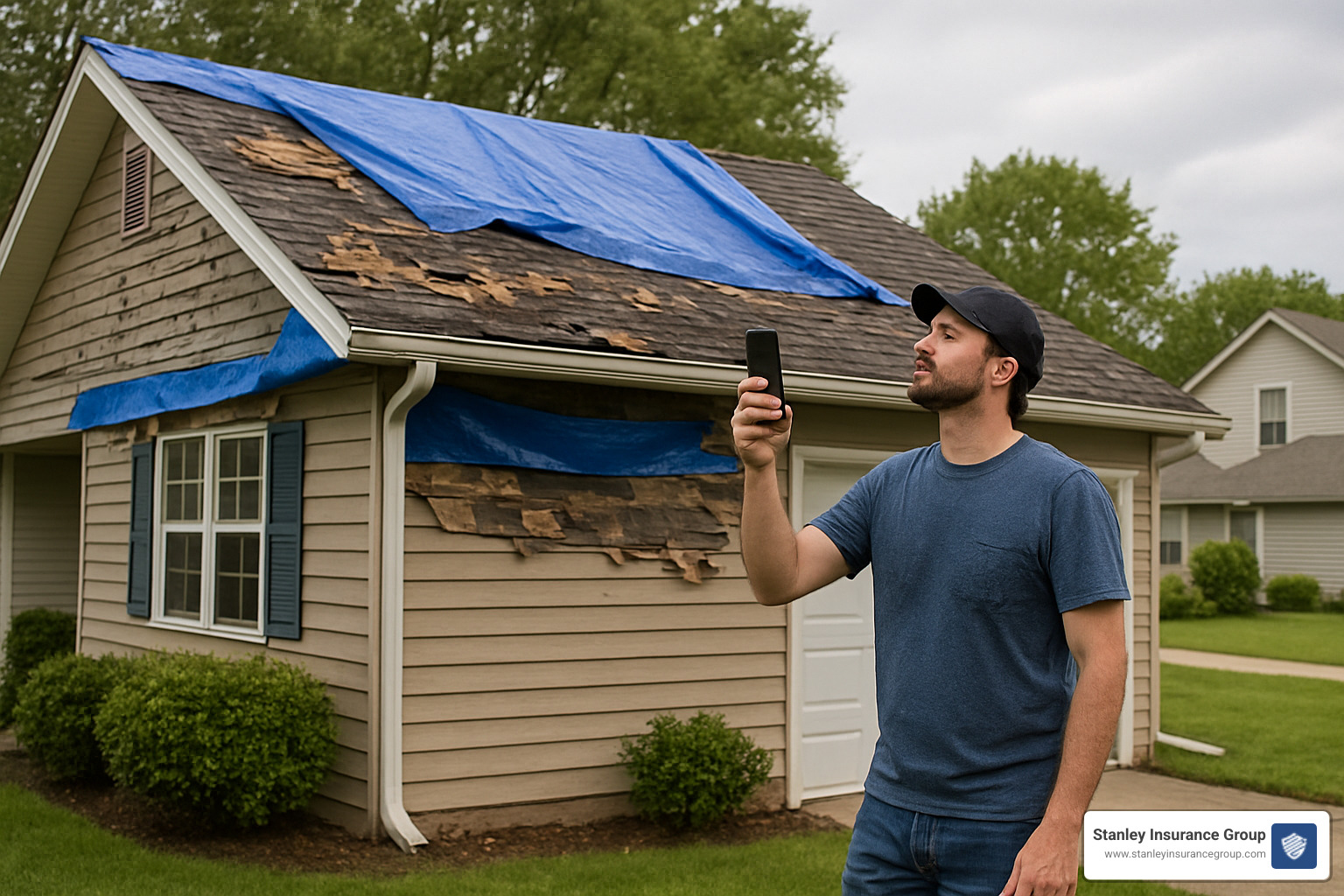
Document everything before you clean up. Your smartphone can be your best friend during the claims process. Take photos and videos of all damage from multiple angles before moving anything. As Ethan from our office often tells clients, "The photos you take immediately after the event are often your strongest evidence when the adjuster arrives days later."
For situations involving theft, vandalism, or other criminal activities, contact your local police department right away. That police report becomes a crucial piece of documentation for your insurance claim, helping to verify exactly what happened and when.
Call us at Stanley Insurance Group—day or night. Since '84, we've been the steady voice on the other end of the line when our neighbors in Columbus, Hilliard, and throughout Ohio face property damage. Our 24/7 availability means you're never alone in these stressful moments. Our Spanish-speaking specialists Ana and Sandra are also ready to assist our Hispanic community members through these difficult times.
"When my basement flooded at 2 AM, I called Stanley Insurance in a panic," one Hilliard client recently shared. "Kaisen answered and walked me through exactly what to do while water was still rising. That personal touch made all the difference."
Be mindful of claim deadlines. While most policies give you up to a year to file a claim after a disaster, some insurers have much shorter windows. Don't delay in reaching out—the sooner we help you start the process, the smoother it typically goes.
For more detailed guidance, our Help with Insurance Claims resource provides additional home insurance claims advice custom to specific situations.
As your independent insurance agents, we don't work for the insurance company—we work for you. Our concierge-level service means we'll be by your side throughout the entire claims process, helping translate insurance jargon and advocating for fair treatment. When disaster strikes, make us your first call after ensuring everyone's safety.
Home insurance claims advice: File or Pay Out-of-Pocket?
One of the most critical decisions after damage occurs is whether to file a claim or handle repairs yourself. This home insurance claims advice isn't just about the immediate situation—it's about protecting your long-term financial interests.
"Picture this: your roof starts leaking during a heavy Columbus thunderstorm, or a pipe bursts in your Hilliard basement during winter. Your first instinct might be to call your insurance company right away... but wait," advises Ana, our Account Specialist. "Taking a moment to evaluate can potentially save you thousands over the coming years."
Before making that call, consider these important factors:
First, get clear on the repair costs. Use services like HomeAdvisor or contact local Ohio contractors for realistic estimates. Next, look at your deductible—that's the amount you'll pay before insurance kicks in. If repairs will cost $1,200 but your deductible is $1,000, you'll only receive $200 from insurance—while potentially triggering years of premium increases that far exceed that amount.
Your claim history matters tremendously. Insurance companies typically look at claims filed within the last 3-7 years, and multiple claims can dramatically impact your rates. Industry data reveals something many homeowners don't realize: filing a single fire-related claim can raise premiums by 29%, while two such claims might spike rates by a whopping 60%.
"This is exactly why we encourage our clients to call us first, day or night, before filing," explains Sandra. "Since '84, we've been helping families do the math to determine if filing makes financial sense. Sometimes, paying out-of-pocket for smaller issues saves substantially more in the long run."
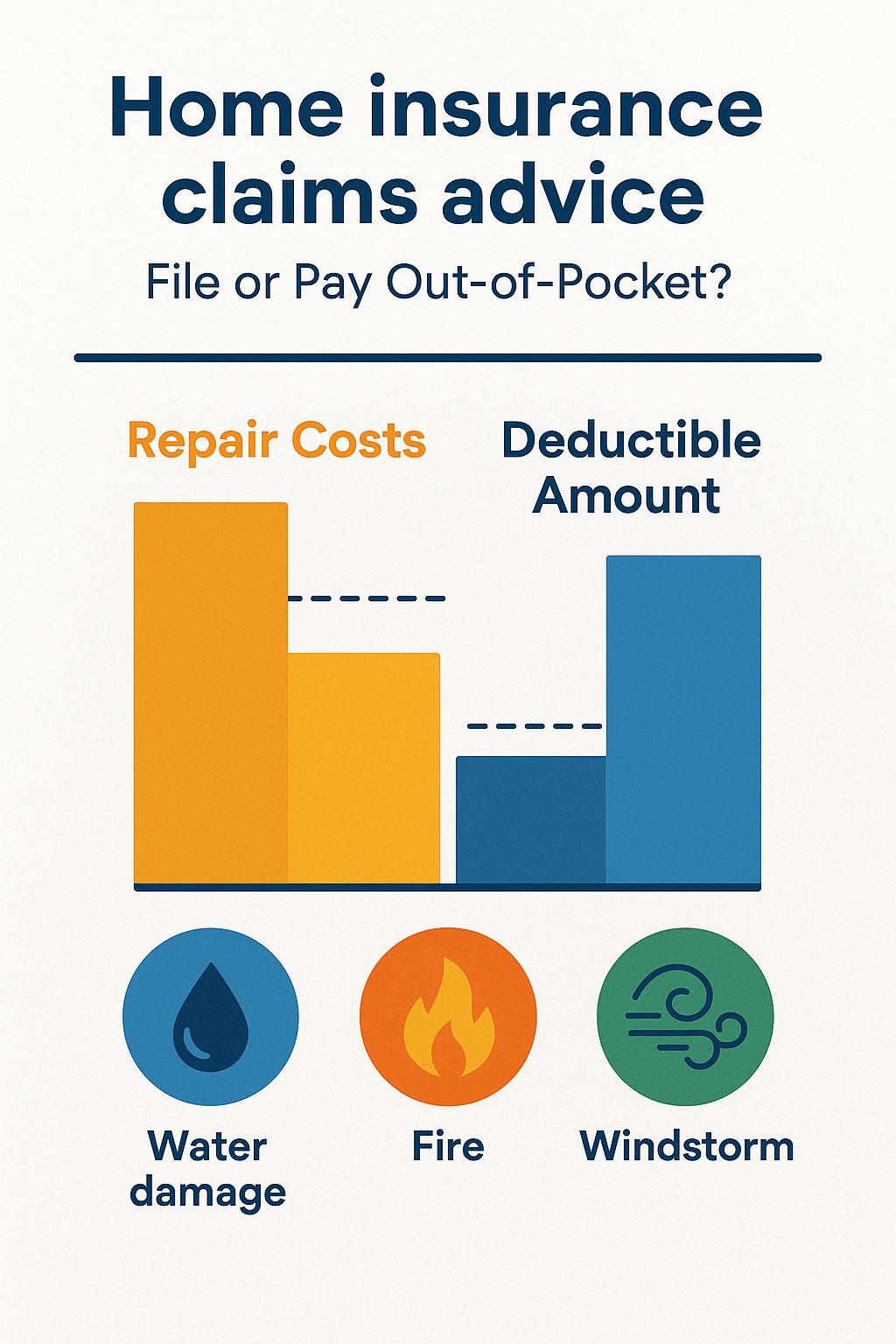
Home insurance claims advice checklist
Before deciding whether to file, work through this practical evaluation:
Get at least two independent repair estimates to understand the true cost. Then subtract your deductible from this amount—that's your potential insurance payout. Consider requesting your Comprehensive Loss Underwriting Exchange (C.L.U.E.) report to review your claim history, as even claims filed by previous homeowners can affect your rates.
"We're always available to help estimate how a particular claim might affect your future premiums," says Kaisen. "That's the advantage of working with an independent agency like Stanley Insurance Group. We build relationships, not just policies. Sometimes that means having the honest conversation that filing a claim isn't in your best financial interest—even if that means no immediate commission for us."
Don't forget to evaluate your emergency fund. If you've been setting aside money for unexpected situations like this, using those funds might be more economical than triggering premium increases.
Home insurance claims advice for keeping premiums low
If you decide to handle smaller issues out-of-pocket, here are proven strategies to keep your insurance costs manageable:
Raise your deductible if you can comfortably afford a higher out-of-pocket expense when claims occur. This simple adjustment often leads to substantially lower premiums. Bundle your policies for significant discounts—as one of only 100 independent agencies nationwide with a Geico partnership, we can offer unique bundling options for our Columbus, Hilliard, and Dublin clients.
Regular maintenance prevents claims before they happen. Chase, our Associate Agent, often reminds clients: "The best claim is the one you never have to file." Keep gutters clean, inspect your roof twice yearly, and address small issues promptly.
Home security improvements not only protect your family but can qualify you for discounts. Smoke detectors, security systems, and water leak detection devices are investments that pay for themselves through both prevention and premium reductions.
"We're here 24/7 to talk through these decisions with you," emphasizes Ethan. "When you're staring at damage to your home, emotions run high. Having a trusted advisor just a phone call away—someone who knows your policy inside and out—can bring clarity to these difficult choices."
Our annual "insurance check-up" is the perfect time to review these strategies and identify opportunities to optimize both your coverage and costs. Call us anytime to schedule yours, whether you prefer English or Spanish—Ana and Sandra are fluent and ready to help.
Learn more about how to lower homeowners insurance premiums or explore when filing makes sense in our guide to When Should You File a Home Insurance Claim?
Navigating the Claim Process Step-by-Step
When you've decided to file a claim, knowing what comes next can make all the difference. Let me walk you through what to expect, with some insider home insurance claims advice from our team at Stanley Insurance Group.
The claims journey begins with your initial call to us. "This first conversation sets the tone for your entire claim experience," says Amy, our Commercial Lines specialist. "We'll gather your policy number, contact details, and a description of what happened, then guide you through next steps."
After notification, you'll receive a claim number and be assigned an adjuster who'll handle your case. This is where our concierge service truly shines – we stay connected with your adjuster throughout the process, ensuring nothing falls through the cracks and advocating for your interests.
Documentation is your best friend during this process. Submit your detailed inventory, photographs, videos, and any police reports promptly. Remember those photos you took immediately after the damage? They're gold now. The digital inventory we helped you create earlier? It's about to prove its worth.
The adjuster will schedule a visit to assess the damage firsthand. Many of our clients appreciate having one of our team members present during this inspection – just ask, and we'll be there. As Chase often reminds clients, "Having an advocate who speaks the insurance language can make a significant difference in how thoroughly your damage is documented."
Next comes the Proof of Loss form – a sworn statement detailing all damaged items and their values. This document forms the foundation of your claim, so accuracy matters. If you're uncertain about any part of this form, pick up the phone and call us – that's exactly why we're here.
The settlement determination follows, calculated based on your policy terms – either Actual Cash Value (ACV) or Replacement Cost Value (RCV). We'll explain what your specific policy provides and what to expect in terms of payment.
When payment is issued, checks may be made out to both you and your mortgage servicer if you have a mortgage. For replacement cost policies, you'll typically receive an initial ACV payment followed by additional funds once repairs are completed and receipts are submitted.
Don't forget about Additional Living Expenses (ALE) if your home is temporarily uninhabitable. Keep receipts for hotel stays, restaurant meals, and other extra costs – most policies provide coverage for these expenses, typically up to 20% of your dwelling coverage.
"Since establishing Stanley Insurance Group in 1984, we've guided countless homeowners through this process," says Brandon Stanley. "When you're our client, you're never alone in navigating these waters."
Prepare for the Adjuster's Visit
The adjuster's inspection is a pivotal moment in your claim. Here's how our team recommends you prepare:
Keep damaged items until the adjuster has seen them, even if they're destroyed. If safety concerns require disposal, photograph everything thoroughly first. Obtain independent contractor estimates to ensure the adjuster's evaluation aligns with actual repair costs. Write down your questions about coverage, timelines, or the repair process so you don't forget anything important during the visit.
"Be present during the inspection and walk through the damage together," advises Ethan, one of our Associate Agents. "And remember to be politely persistent – cooperation is important, but so is ensuring all damage is properly documented."
If you feel overwhelmed by this process, that's completely normal. Just pick up the phone and call us – we've been helping homeowners in Columbus, Hilliard, Dublin, and throughout Ohio handle these important interactions since '84. Our Spanish-speaking team members, Ana and Sandra, are also available if you prefer to discuss your claim in Spanish.
Replacement Cost vs. Actual Cash Value
Understanding the difference between these two settlement types is crucial home insurance claims advice that can significantly impact your financial recovery:
Actual Cash Value (ACV) pays the depreciated value of damaged items. Think of it as replacement cost minus depreciation for age and wear. Your eight-year-old sofa might be worth far less than what you paid for it originally.
Replacement Cost Value (RCV) covers the full cost to replace damaged items with new ones of similar kind and quality, without deduction for depreciation. This means you can actually replace what was lost without dipping into your savings.
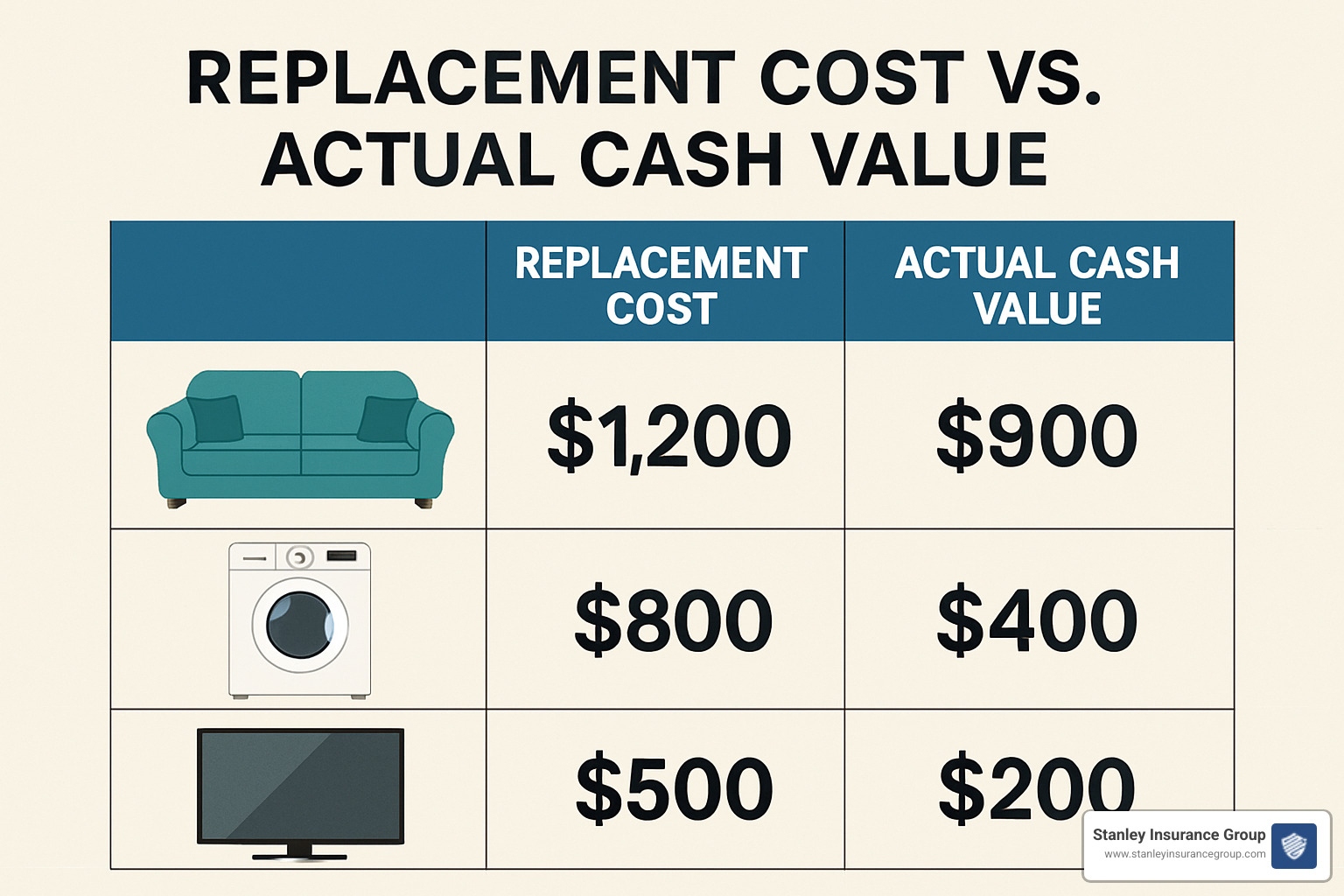
Sandra explains this with a practical example: "If your eight-year-old washing machine is destroyed when a tree falls through your roof, an ACV policy might pay only $200 for that appliance, while an RCV policy would cover the full $800 cost of a new comparable model."
With replacement cost policies, insurers typically pay in two steps: an initial payment based on the ACV, followed by a second "holdback" payment when you provide receipts showing you've replaced the items. This process, while slightly more complex, ultimately provides more complete coverage.
At Stanley Insurance Group, we generally recommend replacement cost coverage whenever possible. During your next insurance check-up, call us to review whether your current policy provides this valuable protection. As your independent agents, we're always just a phone call away to walk you through the details of your specific policy and claims process. After all, that's the advantage of working with a local agency that's been building relationships since '84.
For more detailed information about navigating insurance claims after disasters, the Insurance Information Institute offers an excellent resource on Settling insurance claims after a disaster.
Choosing & Managing Contractors
Finding the right contractors after property damage can feel overwhelming. At Stanley Insurance Group, we've been guiding homeowners through this critical decision since '84, and we have some valuable home insurance claims advice to share about this important step.
"Your insurance company will likely suggest contractors from their preferred network," Amy from our Commercial Lines department often tells clients. "These professionals have been vetted by the insurer, but remember—you always have the freedom to choose your own repair team. This is your home we're talking about."
When you're selecting contractors to restore your Columbus, Hilliard, or Dublin home, take your time with this decision. Look for professionals who are licensed, bonded, and insured in Ohio. Don't just take their word for it—ask to see documentation. A reputable contractor will be happy to provide proof.
"Always check references," advises Ethan, one of our Associate Agents. "I recommend speaking with at least two previous clients who had similar repair work done. Ask specific questions about timeliness, communication, and how they handled unexpected issues during the project."
Getting detailed, line-by-line estimates is non-negotiable. These should clearly outline materials, labor costs, and realistic project timelines. If something seems vague or too good to be true, it probably is.

Be particularly cautious after widespread disasters like the severe storms we sometimes experience in Ohio. Unfortunately, these events can attract storm chasers—unscrupulous contractors who go door-to-door soliciting business. Red flags include demands for large upfront payments, high-pressure sales tactics, or reluctance to provide written estimates.
"One strategy I often recommend," says Chase, "is arranging a three-way meeting between you, your contractor, and the insurance adjuster. This ensures everyone's on the same page about the scope of work and associated costs right from the start."
Since establishing our agency in 1984, we've built relationships with trustworthy contractors throughout our service areas. Just pick up the phone anytime—we're available 24/7 to share recommendations if you need them. Our Spanish-speaking team members Ana and Sandra can also provide this guidance for our Spanish-speaking clients.
Keep the Paper Trail Alive
The paperwork doesn't end when you hire a contractor—in fact, that's just the beginning of an important documentation process.
"Think of yourself as the project's historian," Kaisen likes to tell our clients. "Every document, receipt, and photo adds another chapter to your recovery story."
When unexpected issues arise during repairs (and they often do, especially with water or fire damage), always get written change orders. These documents protect both you and your contractor by clearly outlining any modifications to the original plan.
Track every payment carefully and request receipts for all materials purchased for your project. This documentation isn't just for your insurance claim—it's also valuable for tax purposes and potential future home sales.
One often-overlooked document that our team at Stanley Insurance Group always emphasizes is the lien waiver. "These papers are your shield against subcontractor claims," explains Amy. "If your primary contractor fails to pay their workers or suppliers, those parties could potentially file a lien against your property without these waivers."
Before any work begins, verify that all necessary building permits have been secured. Unpermitted work can cause serious headaches down the road, potentially affecting your home's value or even resulting in removal of non-compliant improvements.
We also recommend taking progress photos throughout the repair process, especially before walls are closed up. These images document what's behind your finished surfaces and can be invaluable if issues arise later.
"The paper trail doesn't end when repairs are complete," Chase reminds our clients. "Those final photos and documentation become part of your home's history. They should be added to your home inventory and kept somewhere safe—preferably digitally backed up in the cloud."
At Stanley Insurance Group, we've been helping homeowners steer the contractor selection and management process for nearly four decades. We understand it can be stressful, but you don't have to figure it out alone. Call us anytime—day or night—and we'll help you make informed decisions about your home's restoration. That's the concierge-level service and relationship building that sets independent insurance agents like us apart.
What If Your Claim Is Denied or Underpaid?
It happens more often than you might think - you've done everything right, documented thoroughly, and still receive a letter saying your claim was denied or an offer that doesn't come close to covering your damages. Don't lose hope! This is where having Stanley Insurance Group in your corner since '84 makes all the difference.
"When a client calls us about a denied claim, the first thing I tell them is 'don't panic, and don't accept this as the final word,'" says Ana, one of our bilingual Account Specialists. "Insurance policies are complex contracts with room for interpretation, and we're here to help you steer the appeals process."
If you receive a denial or underpaid settlement offer, here's what to do:
Request a detailed explanation in writing that cites the specific policy language supporting the denial. Insurance companies are required to tell you exactly why they're denying your claim.
Call us immediately - day or night. As your independent advocates, we'll review the denial letter alongside your policy and help determine whether the decision has merit or should be challenged. Our team is available 24/7 because we understand these situations can't wait until business hours.
"Sometimes it's a simple misunderstanding that we can clear up with a phone call," explains Kaisen. "Other times, we need to help our clients build a stronger case with additional documentation or expert opinions."
If we believe the denial was unjustified, we'll help you prepare a formal appeal letter that addresses each reason for denial with supporting evidence. This often includes additional photographs, contractor statements, or expert assessments that strengthen your position.
Many homeowners don't realize their policy contains an appraisal clause - a valuable tool for resolving disputes about damage values without going to court. This process involves both you and the insurer hiring independent appraisers who then select an umpire to make the final decision if they can't agree. While there are costs involved, this can be faster and less expensive than litigation for substantial claims.
"For complex or large claims, especially after major disasters, some clients benefit from hiring a public adjuster," notes Chase. "These licensed professionals work exclusively for policyholders, typically charging between 5-15% of the final settlement. Before going this route, give us a call to discuss whether it makes sense for your situation."
If these steps don't resolve the issue, you can file a complaint with the Ohio Department of Insurance (or your state's regulatory agency). We can help guide you through this process, including what documentation to submit and what timeline to expect for a response.
For our Spanish-speaking clients throughout Columbus, Hilliard, and surrounding areas, Ana and Sandra are available to explain these options in Spanish, ensuring language is never a barrier to receiving fair claim treatment.
"The most important thing to remember is that you're not alone in this process," emphasizes Amy, our Commercial Lines specialist. "We've been helping clients resolve claim disputes since 1984, and we'll be with you every step of the way. Just pick up the phone - we're here to help you get the settlement you deserve."
Most claim disputes are resolved without legal action, but the process requires patience and persistence. With Stanley Insurance Group's concierge-level service backing you up, you'll have experienced advocates fighting for your interests, not the insurance company's bottom line.
Frequently Asked Questions about Home insurance claims advice
How long do I have to file a claim?
Time is truly of the essence when it comes to filing your claim. While most policies give you up to one year from the date of disaster, many companies set shorter deadlines—sometimes as brief as 180 days.
"This is exactly why we encourage our clients to call us right away after experiencing a loss," Sandra explains with genuine concern. "The sooner you reach out, the better we can help ensure you meet all required deadlines."
For our neighbors in Columbus, Hilliard, Dublin, and throughout our service areas, we strongly recommend reporting claims within days of the incident—not weeks or months later. When you delay reporting, you're not just making the claims process more complicated; you might inadvertently give the insurer grounds to deny your claim entirely. One quick phone call to us can prevent this headache entirely!
Will filing one claim raise my premium?
This is perhaps the most common question we hear, and the honest answer is: it depends. Several factors come into play:
The type of claim matters significantly—weather-related claims typically impact rates differently than preventable incidents like water damage from plumbing failures.
Your previous claim history plays a major role in how insurers view your new claim.
Your state's regulations provide certain protections—some states prevent insurers from raising rates for claims resulting from natural disasters.
Your insurer's specific policies vary considerably across companies.
"In my experience, clients with spotless records typically see minimal impact from a single claim," Ethan shares with a reassuring smile. "But multiple claims filed within a few years? That's when you might face significant increases or even non-renewal notices."
This uncertainty is precisely why we offer 24/7 consultation before you file. Since '84, we've been helping families weigh the immediate benefit of claim payments against potential long-term premium increases. Sometimes a five-minute phone call can save you years of higher premiums!
Do I have to use the insurer's recommended contractor?
Absolutely not! This is your home we're talking about—you should feel completely comfortable with whoever is repairing it.
"While insurance companies certainly have their networks of preferred contractors, the final decision is entirely yours," Amy confirms with conviction. "The insurer must pay for proper repairs regardless of who performs the work."
If your chosen contractor's estimate exceeds what your insurance company offers to pay, don't worry—you have several options:
- Ask your contractor to meet directly with the adjuster to discuss the differences
- Provide additional documentation supporting the higher estimate
- Invoke the appraisal clause in your policy to resolve the dispute fairly
At Stanley Insurance Group, we've been building relationships with quality contractors throughout central Ohio since establishing our agency in 1984. We're always happy to recommend trusted professionals in your area if you need guidance. Just pick up the phone and ask—that's what we're here for!
Our bilingual team members Ana and Sandra can even help Spanish-speaking homeowners steer these contractor conversations, ensuring nothing gets lost in translation during this critical phase of your recovery.
Conclusion
When storms rage or accidents happen, knowing how to steer your home insurance claim can make all the difference. With the right home insurance claims advice and a partner like Stanley Insurance Group by your side, you can transform what feels like an overwhelming process into a manageable journey.
Since we opened our doors in '84, our team has walked alongside countless families during their most challenging moments. We've held hands, dried tears, and fought for fair settlements when it matters most. This isn't just business for us—it's personal.
"Insurance is really about being there when people need you most," says Amy from our Commercial Lines department. "That's why we answer our phones at 2 AM when a tree has just crashed through someone's living room."
Remember these essential takeaways as you steer your insurance journey:
- Be prepared before disaster strikes by understanding your policy and maintaining a detailed home inventory
- Document everything carefully when damage occurs—those photos may be your most powerful evidence
- Consider the financial impact of filing smaller claims versus paying out-of-pocket
- Keep every receipt and document throughout the repair process
- Don't accept a denial without question if you believe you're entitled to coverage
Perhaps most importantly, know that you're never alone in this process. Our team—including Ana and Sandra who provide warm, comprehensive service in Spanish—is just a phone call away, 24 hours a day, 7 days a week.
"We've built our reputation since '84 on being there when our clients need us," explains Chase. "That's the advantage of working with an independent agency like ours—we're large enough to offer options like our exclusive Geico partnership, but small enough to remember your children's names."
Whether you're picking up the pieces after a disaster or simply want to better understand your coverage before trouble hits, reach out through our website. We're ready to talk through your questions, review your policy, or help you steer a claim—anytime day or night.
After all, insurance isn't just about policies—it's about people. And at Stanley Insurance Group, we've been putting people first since '84.
Similar posts


